Please, insert Virtual Showroom access password:
Percale vs Cetim: A Ciência por Trás do Conforto
Percale e cetim não são tipos de algodão. São dois tipos de pontos de tecelagem diferentes, com impacto direto na frescura, no toque, no aspeto visual e na forma como a roupa de cama se comporta ao longo do tempo. Neste guia, reunimos os critérios que realmente ajudam a escolher melhor.
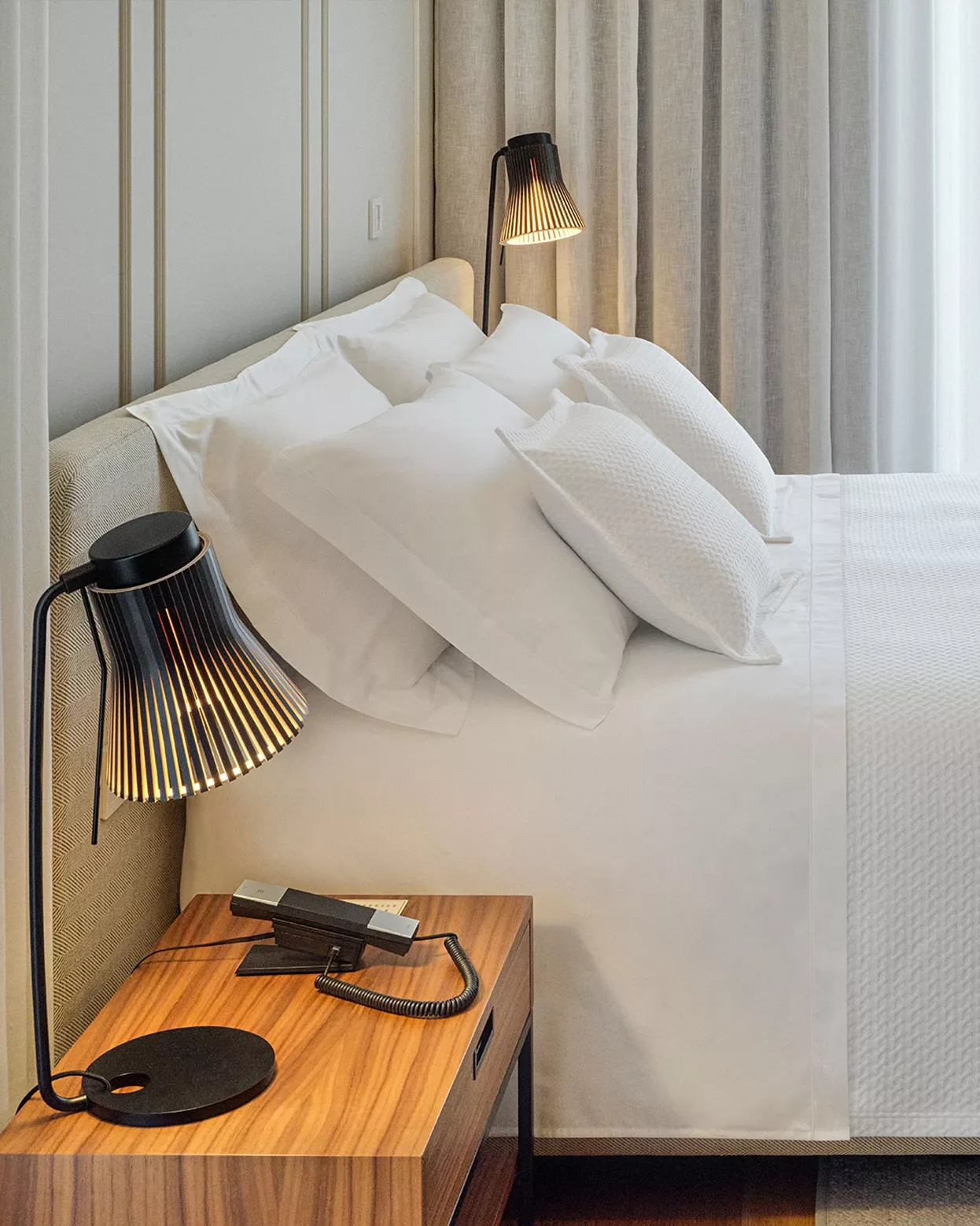
WHAT IS THE DIFFERENCE BETWEEN PERCALE AND SATIN?
The main difference lies in the fabric construction. In both cases, high-quality cotton can be used, including long and resistant fibers. What changes is how the threads are interwoven and, therefore, the final result.
Percale uses a simple and balanced weave, plain weave, where the threads interlace one thread over and one thread under. This creates a fabric with a crisper feel, matte look, and excellent breathability.
Satin features more visible threads on the surface where the warp threads float over several weft threads, satin weave. This structure makes the fabric softer, more fluid, and with a subtle sheen, giving it a more elegant and cozy character. The longer the floats, the more sheen and fluidity are achieved.
In short
- Percale, matte look, favors freshness and lightness.
- Satin, smooth and shiny, privileges softness, fluidity, and thermal comfort.
- Fiber quality remains decisive in both cases.
PERCALE VS SATIN: TOUCH, TEMPERATURE, AND DURABILITY
An informed choice begins by understanding how each behaves in daily use.
Touch and feel on the skin
Percale has a fresh and slightly crisp feel, highly associated with hotel bedding. Satin is smoother and silkier, giving an immediate sensation of softness.
Breathability and thermal regulation
For those who feel hot at night, percale is usually the most comfortable option because it allows greater air circulation. Satin tends to retain a little more heat, which may appeal in cold seasons or to anyone looking for a cozier bed.
Visual appearance
Percale has a matte finish and cleaner lines. Satin features a subtle sheen and is more fluid, creating a more sophisticated presence on the bed.
Resistance to use
When the raw material is good, both are durable. Even so, percale usually stands out for its greater stability and lesser tendency for signs of surface wear. Satin offers excellent durability when subjected to proper care.
SAMPEDRO'S RECOMMENDATION
200 Thread Count Percale
For those who want to keep the bed cool, with a light touch and good air circulation.
300 Thread Count Satin
For those who prefer a softer, silkier surface with a subtle sheen.
SIMPLE CARE TO PRESERVE YOUR BEDDING
A good weave deserves proper care. Washing with mild detergent, avoiding excess fabric softener, and removing pieces before they overdry helps preserve the fabric's touch and breathability.
Recommended best practices:
- Wash at moderate temperatures and with gentle cycles.
- Separate heavy items to reduce unnecessary friction.
- Dry without excess to minimize wear and permanent creases.
Frequently Asked Questions
Which one is better for those who feel hot?
In most cases, percale. Its structure favors air circulation and creates a cooler feeling throughout the night.
Is satin always softer?
At first impression yes, because it has a smoother and silkier touch. Still, the quality of the fiber makes a big difference in comfort.
Does percale last longer?
With good raw material, both can last a long time. Percale usually stands out for its durability and how well it evolves with washings.
Is it worth choosing based solely on thread count?
No, the thread count is just one indicator among several. The weave, the fiber, and the consistency of the construction are more reliable criteria.
Article by the Sampedro team, designed to help the reader compare materials and make informed decisions when choosing bedding.

Clients who experienced the Legacy of Portugal's Oldest Textile Factory